
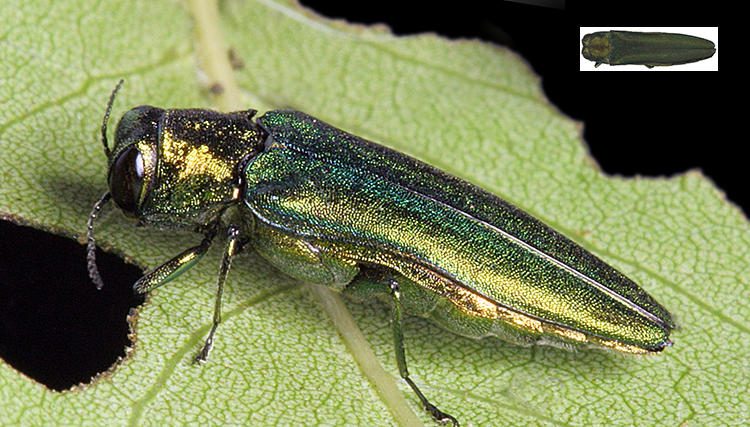
The Emerald Ash Borer (EAB) is a small, metallic green beetle with a widely notorious reputation, and not in a good way. Since its discovery in Michigan in 2002, it has killed over 100 million ash trees across North America.
Originally from Asia, the EAB likely arrived in wood packing materials and has since spread to 37 states. In Colorado, researchers first detected it in Boulder in 2013, and it has steadily expanded along the Front Range. It has even been found as far west as Carbondale.
As of early 2026, the EAB has not been detected in the Pikes Peak region. However, its continued spread makes future arrival likely.
And here’s the major concern: 20 percent of Colorado’s urban canopy could be at risk.
urgent update
Colorado Springs, CO, August 5, 2026
The City of Colorado Springs Forestry Office has confirmed the presence of the Emerald Ash Borer (EAB) within the city limits, signaling a significant threat to the region’s urban forests. The EAB, an invasive insect native to Asia, poses a serious risk to ash tree populations and requires immediate attention from residents and local businesses.
Table of Contents
TL;DR: What is Emerald Ash Borer (EAB), and is it a threat to my trees?
Answer:
Why Are Ash Trees In Trouble?
The EAB doesn’t just nibble on trees. It shuts down their entire life support system.
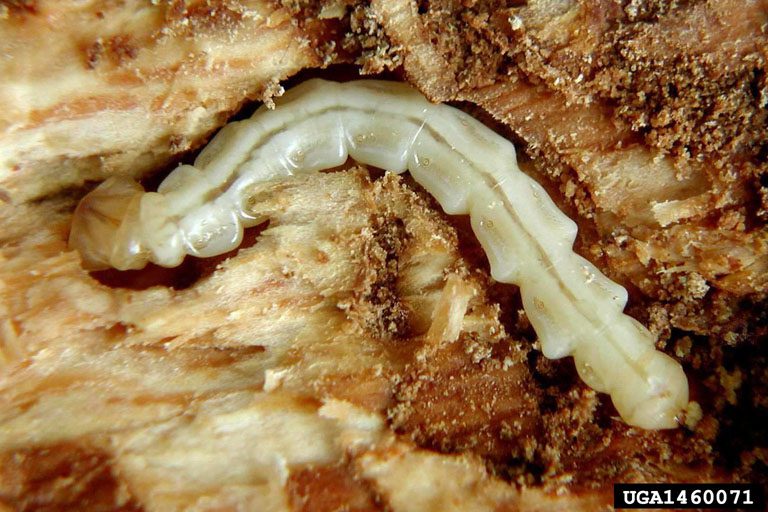
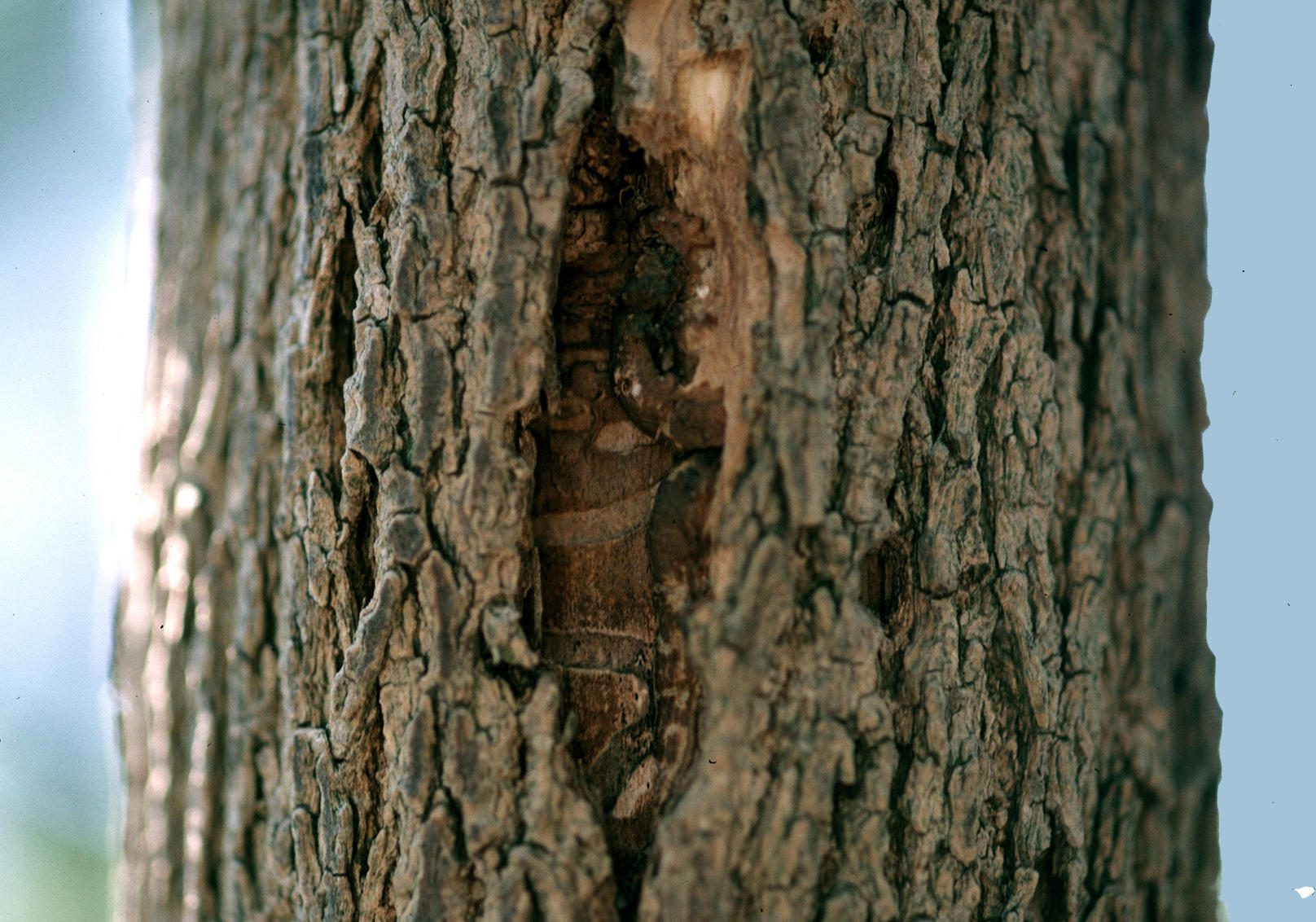
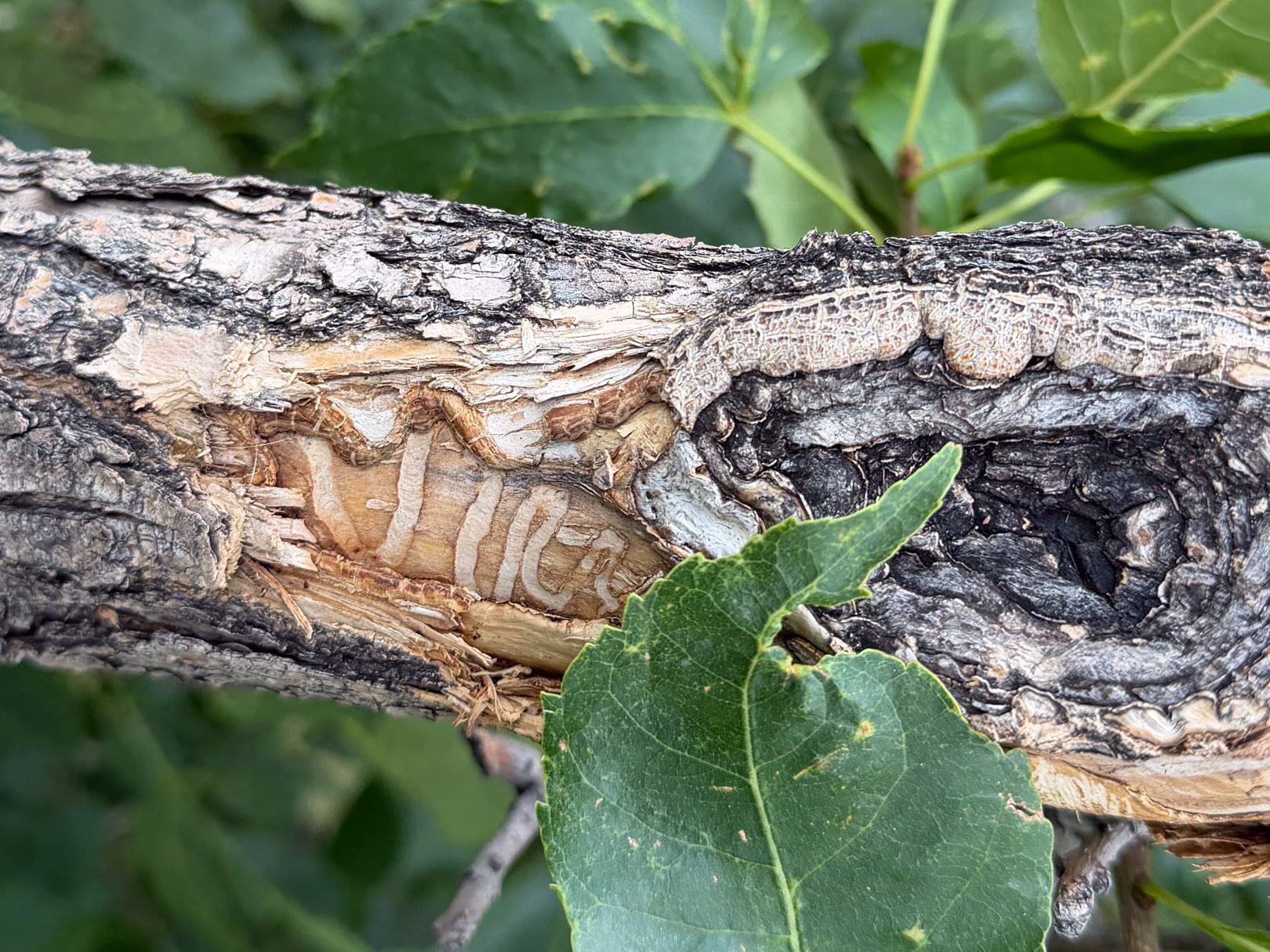
The larvae feed beneath the bark, creating winding, S-shaped tunnels that block the flow of water and nutrients. Think of it like cutting off a tree’s plumbing and food supply at the same time.
Even worse, ash trees can look healthy for 2 to 4 years after infestation. This means damage is often underway before anyone notices.
How to Identify an Ash Tree
Not sure if you even have an ash tree? You’re not alone. Ash trees are extremely common across Colorado, even though they aren’t native to the region.
Green and white ash are widely planted along streets, in parks, and in residential neighborhoods because of their hardiness, steady shade, and bright striking fall colors. In many communities, they make up a significant portion of the urban landscape.
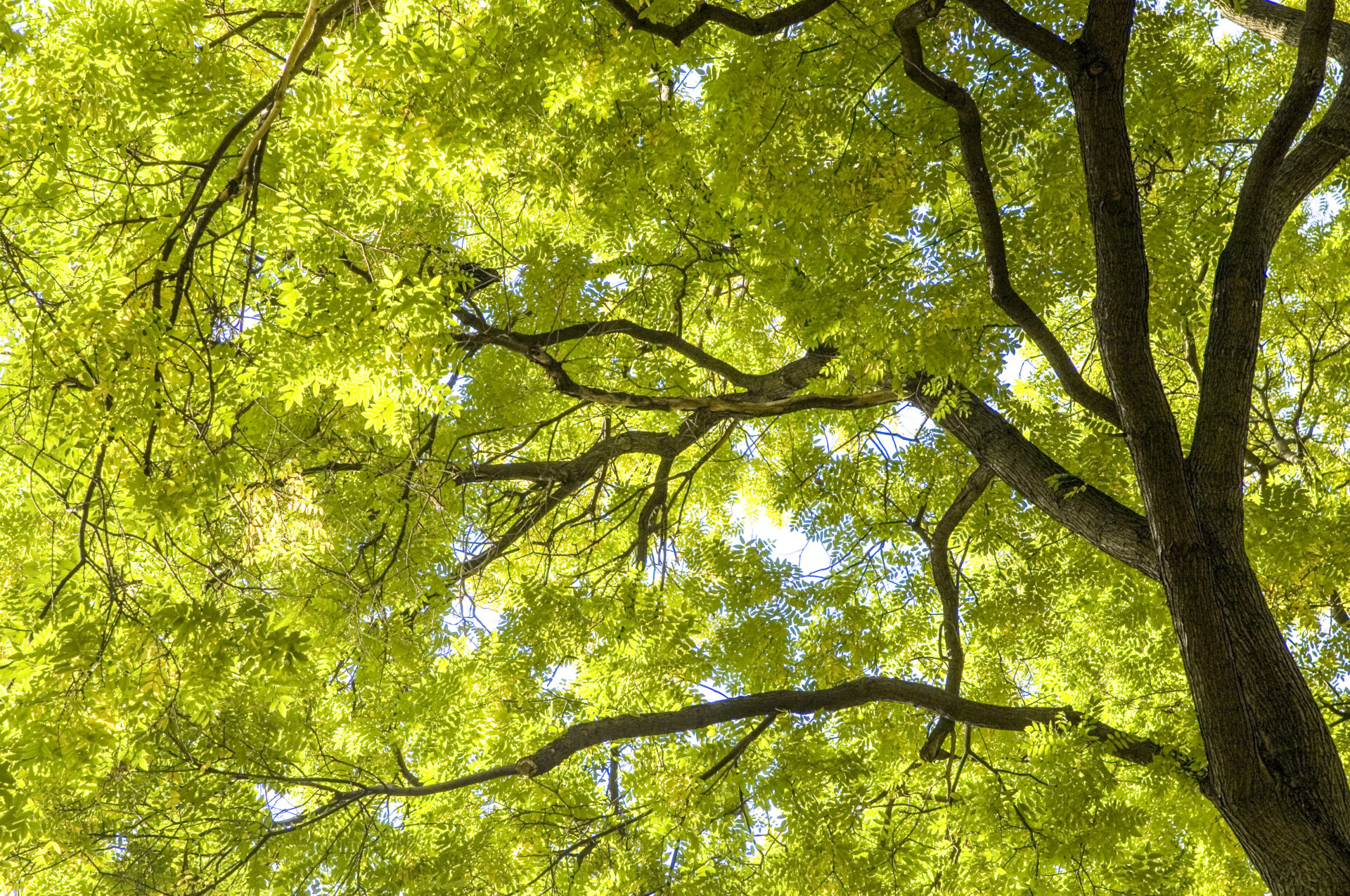
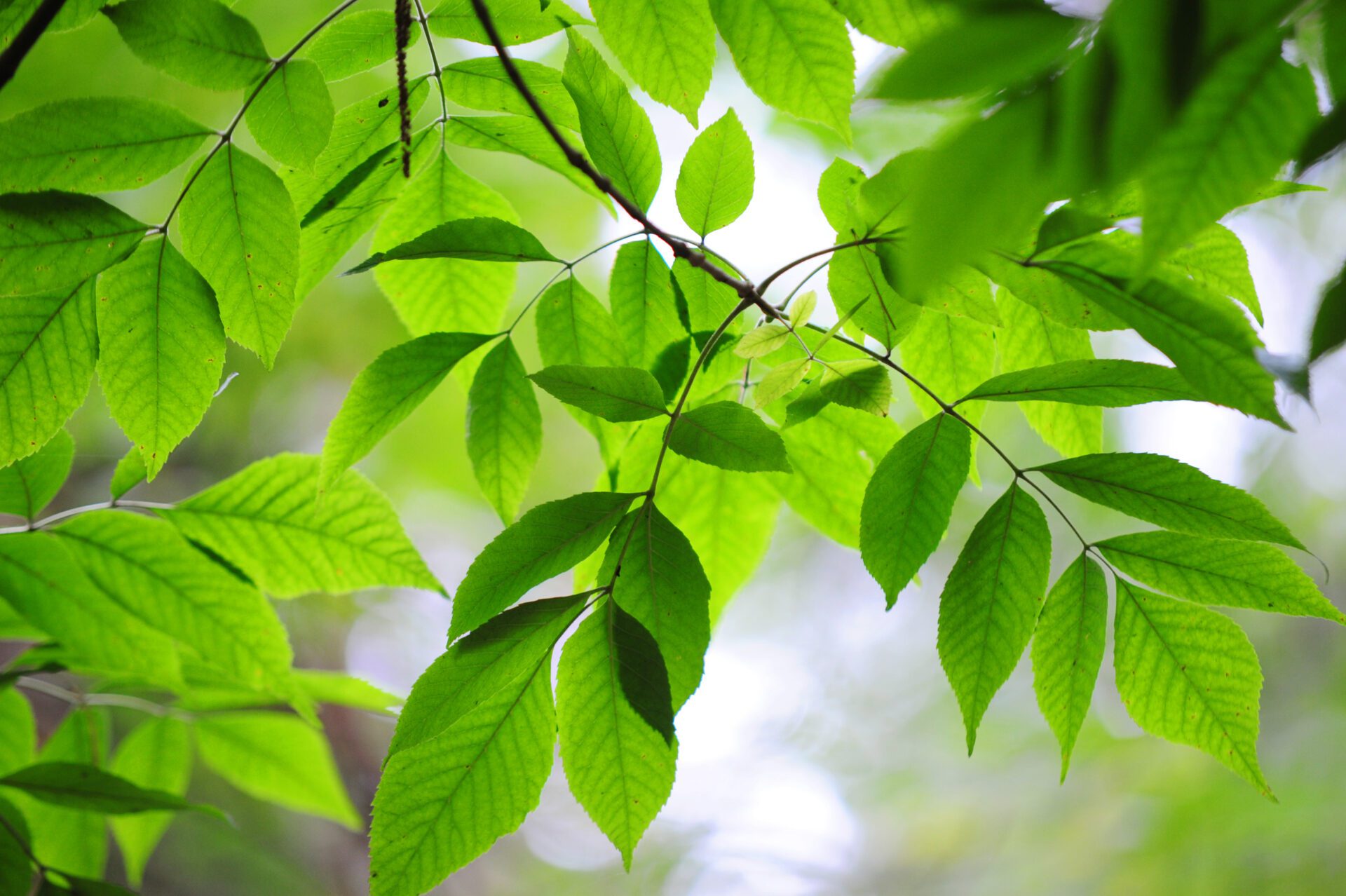
Ash trees have a few defining characteristics that make them easier to identify once you know what to look for. Their branches grow opposite, meaning they come out in pairs across from one another, not alternating.
Their leaves are compound, typically made up of 5 to 11 individual leaflets. As the tree matures, the bark develops a gray color with distinct diamond-shaped ridges.
If your tree checks these boxes, there’s a good chance you are looking at an ash. And if that is the case, it is worth keeping a closer eye on it as Emerald Ash Borer continues to spread.
Signs of Emerald Ash Borer Infestation
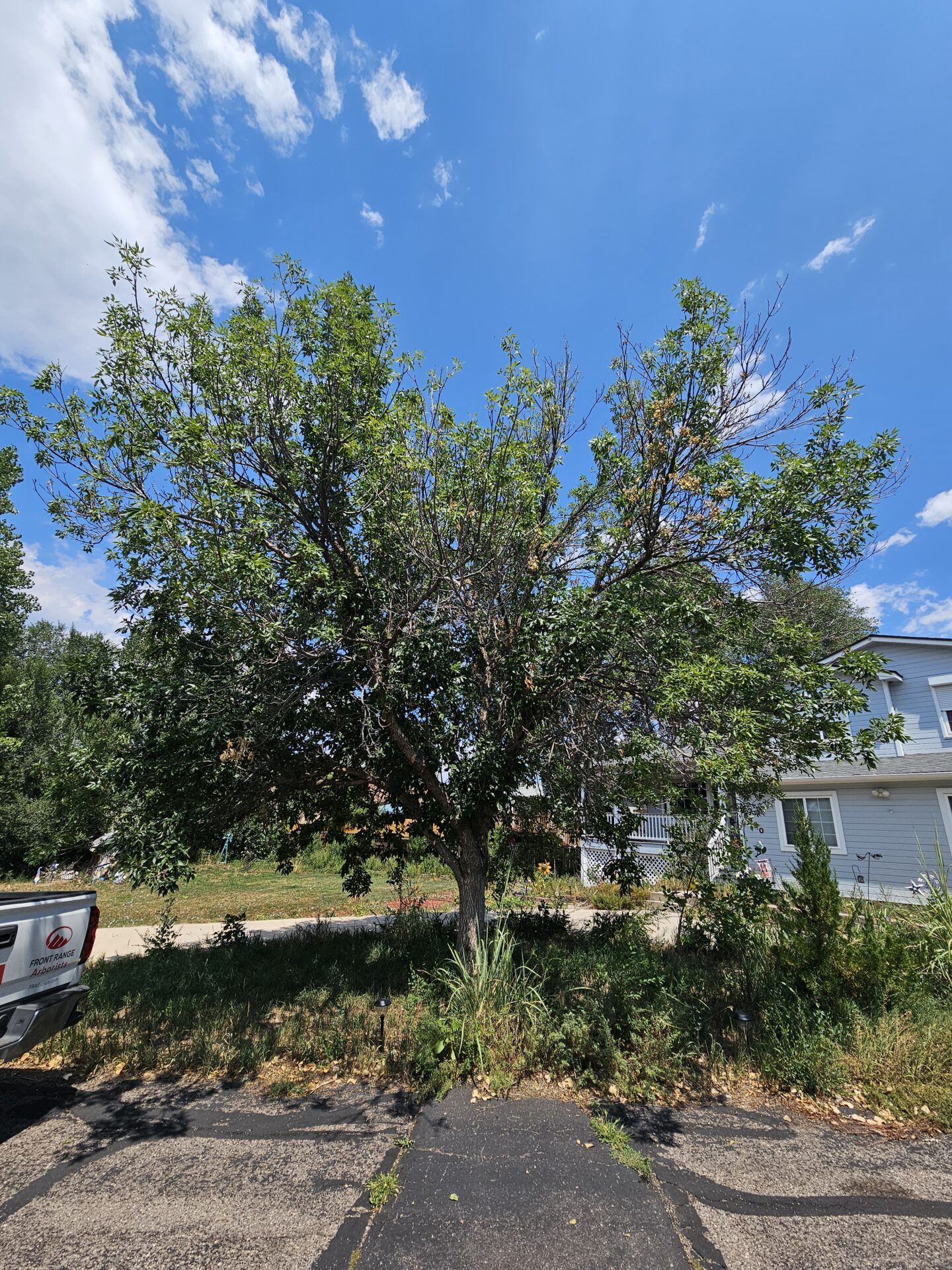
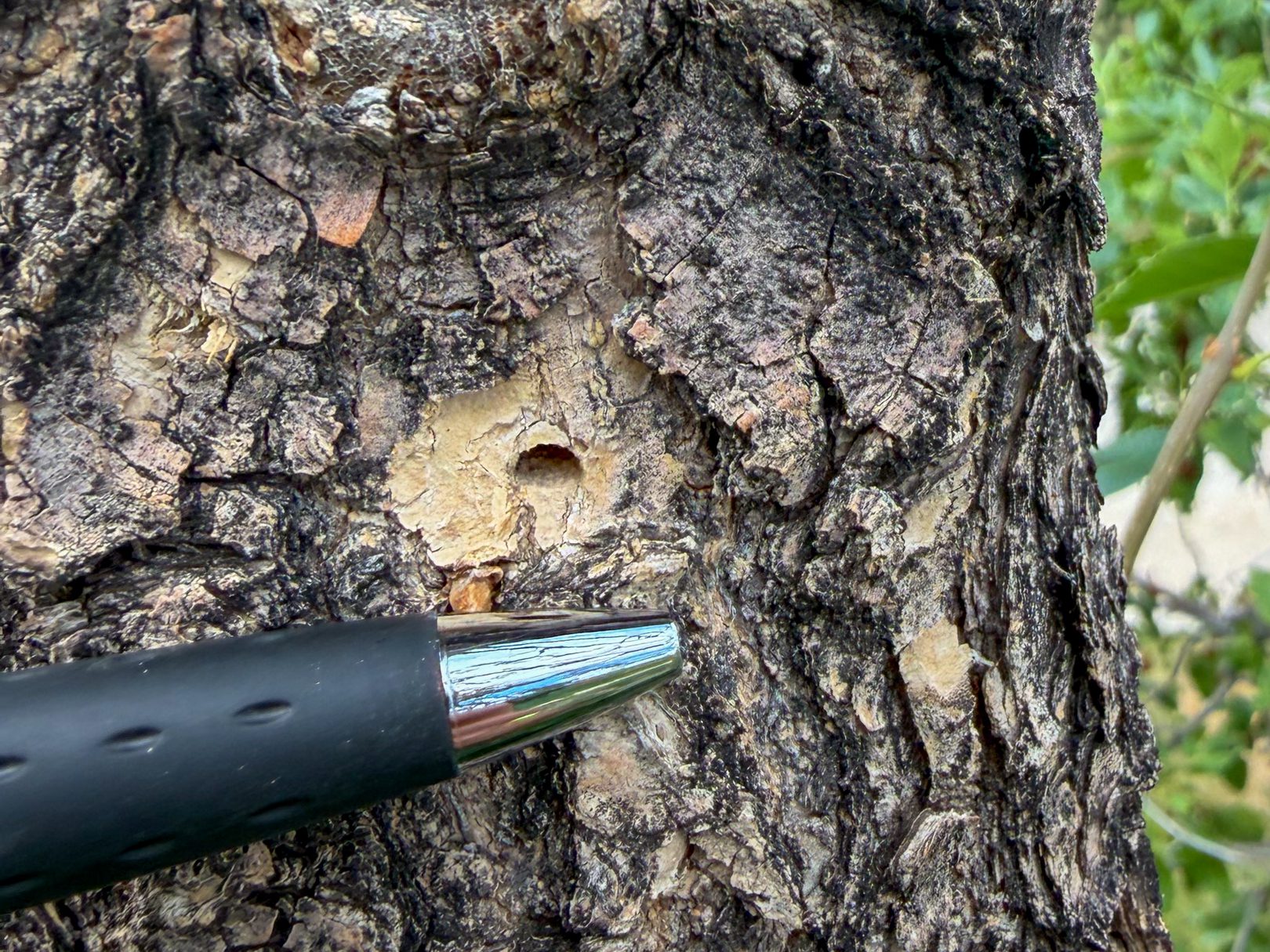
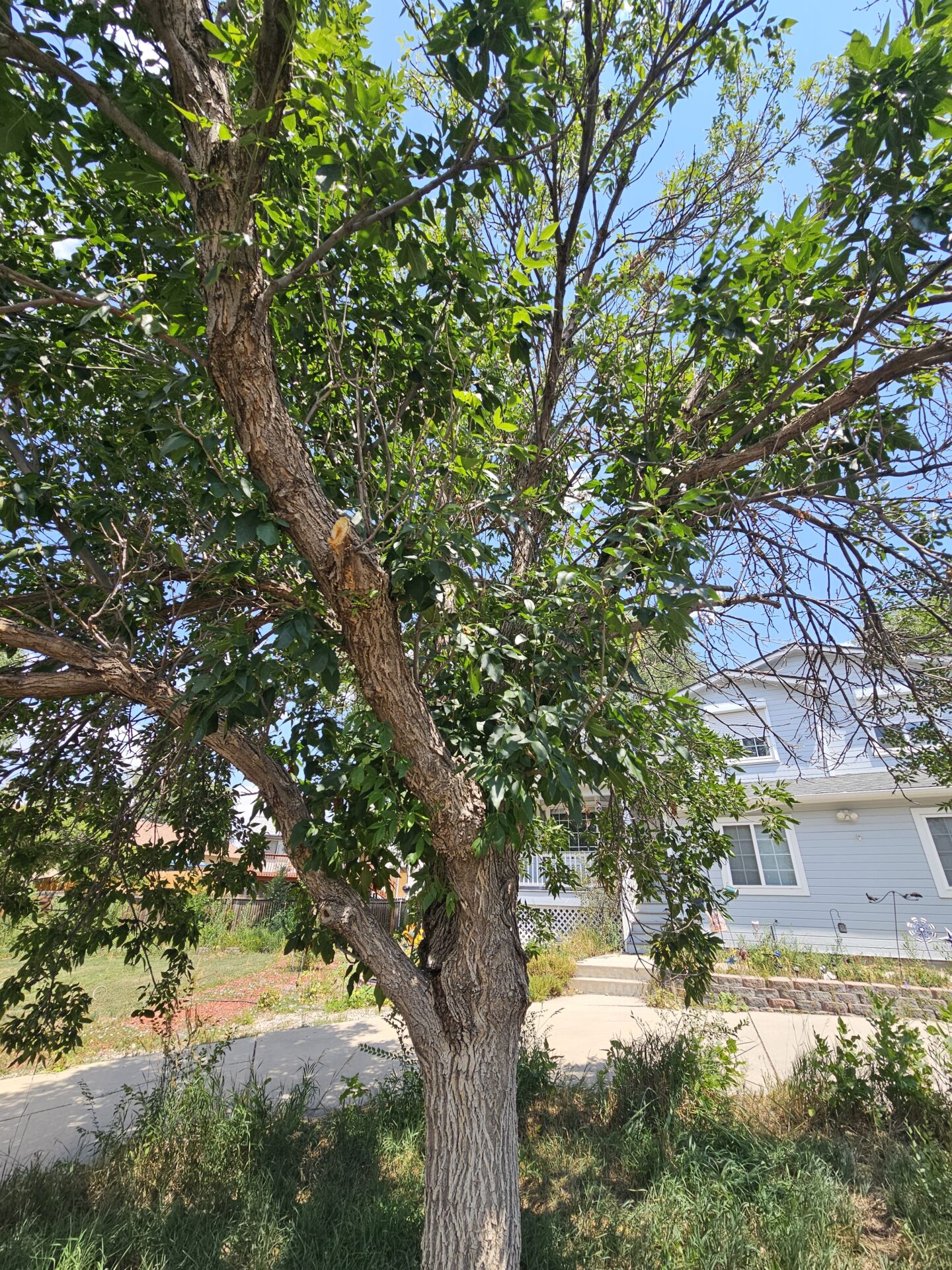
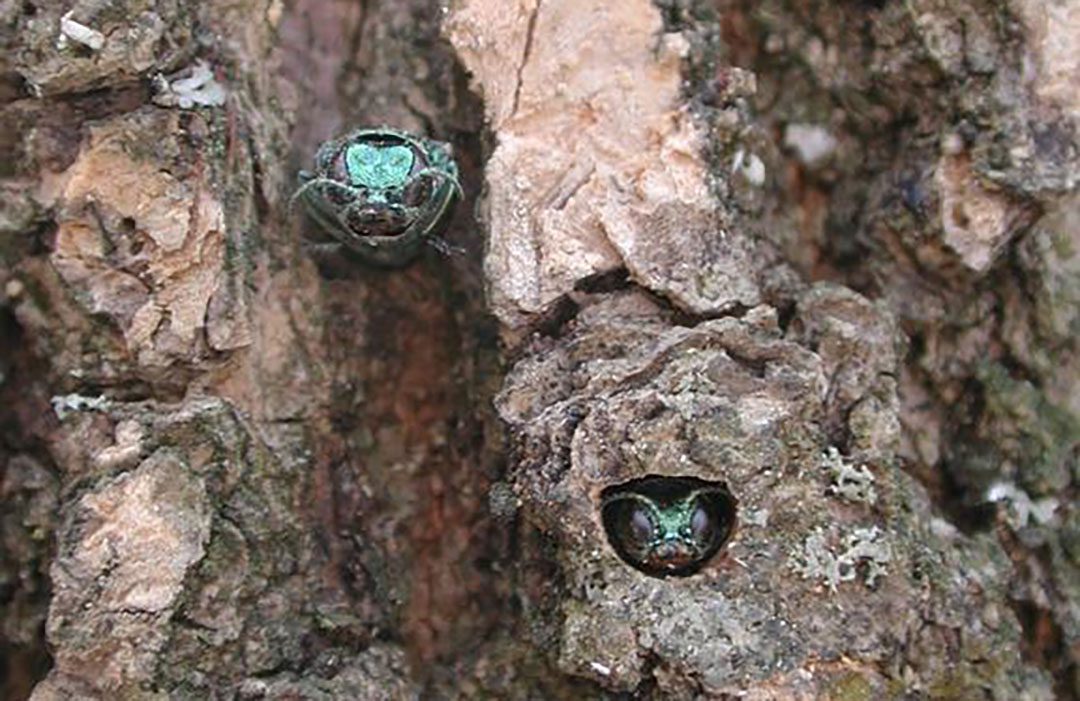
- Thinning canopy, especially in the upper portion of the tree
- Dead or dying branches
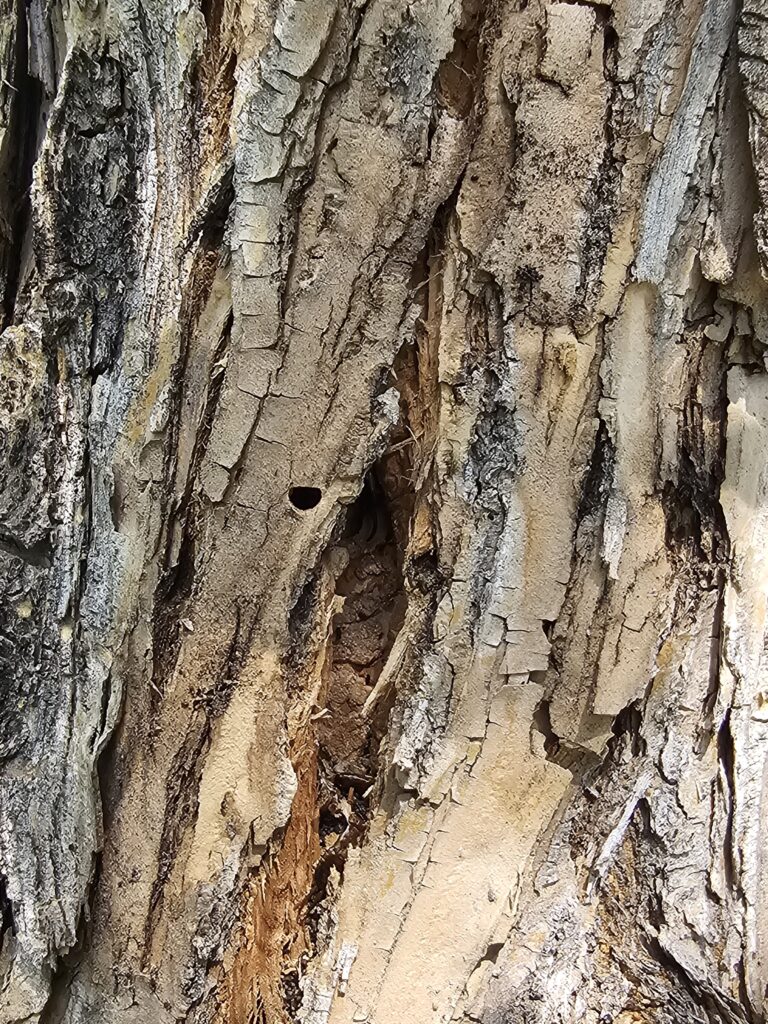
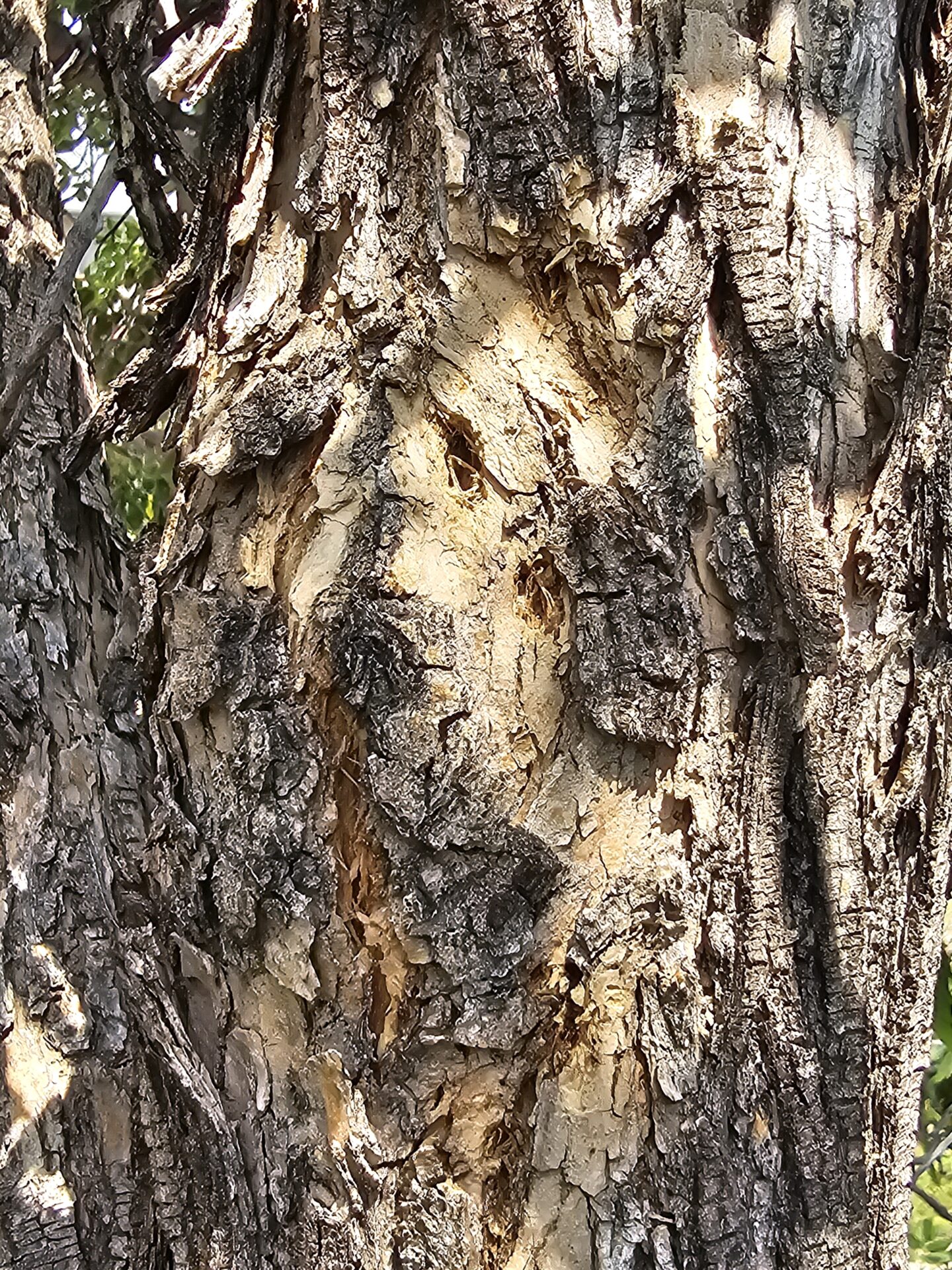
- Vertical cracks or splitting in the bark
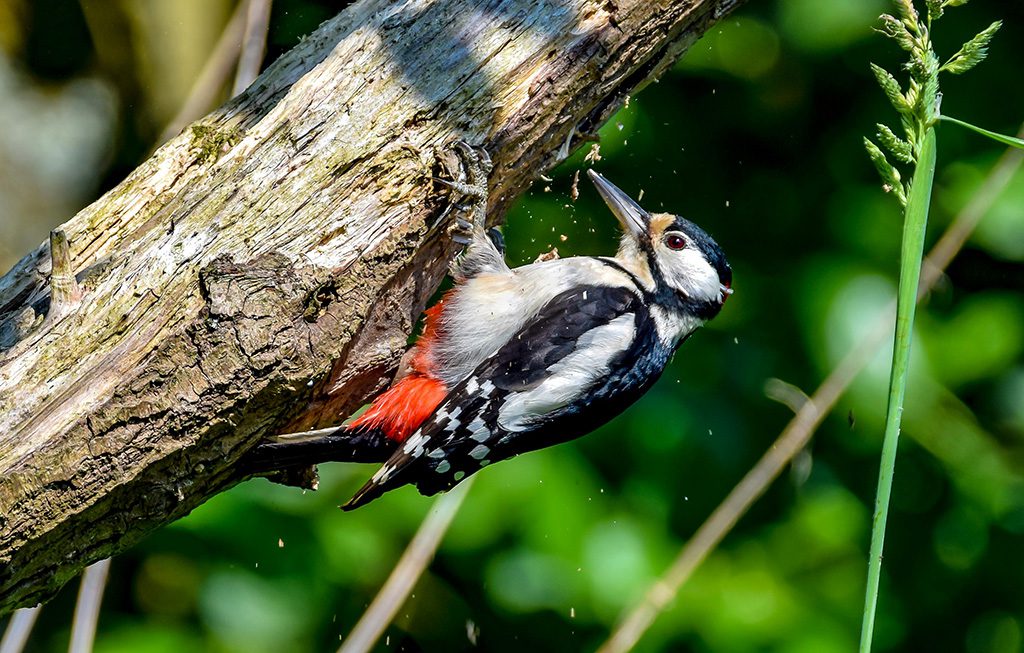
- Increased woodpecker activity
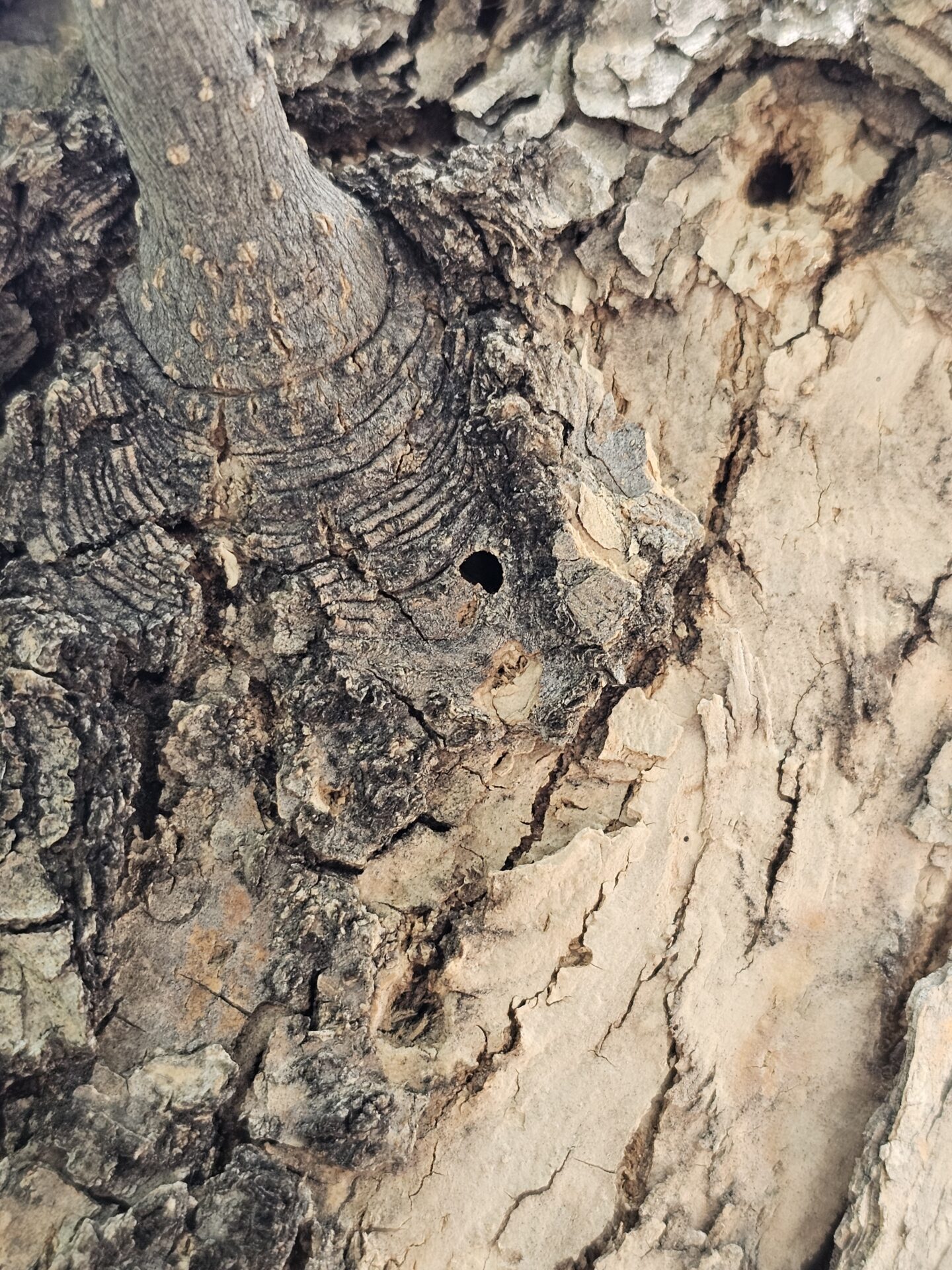
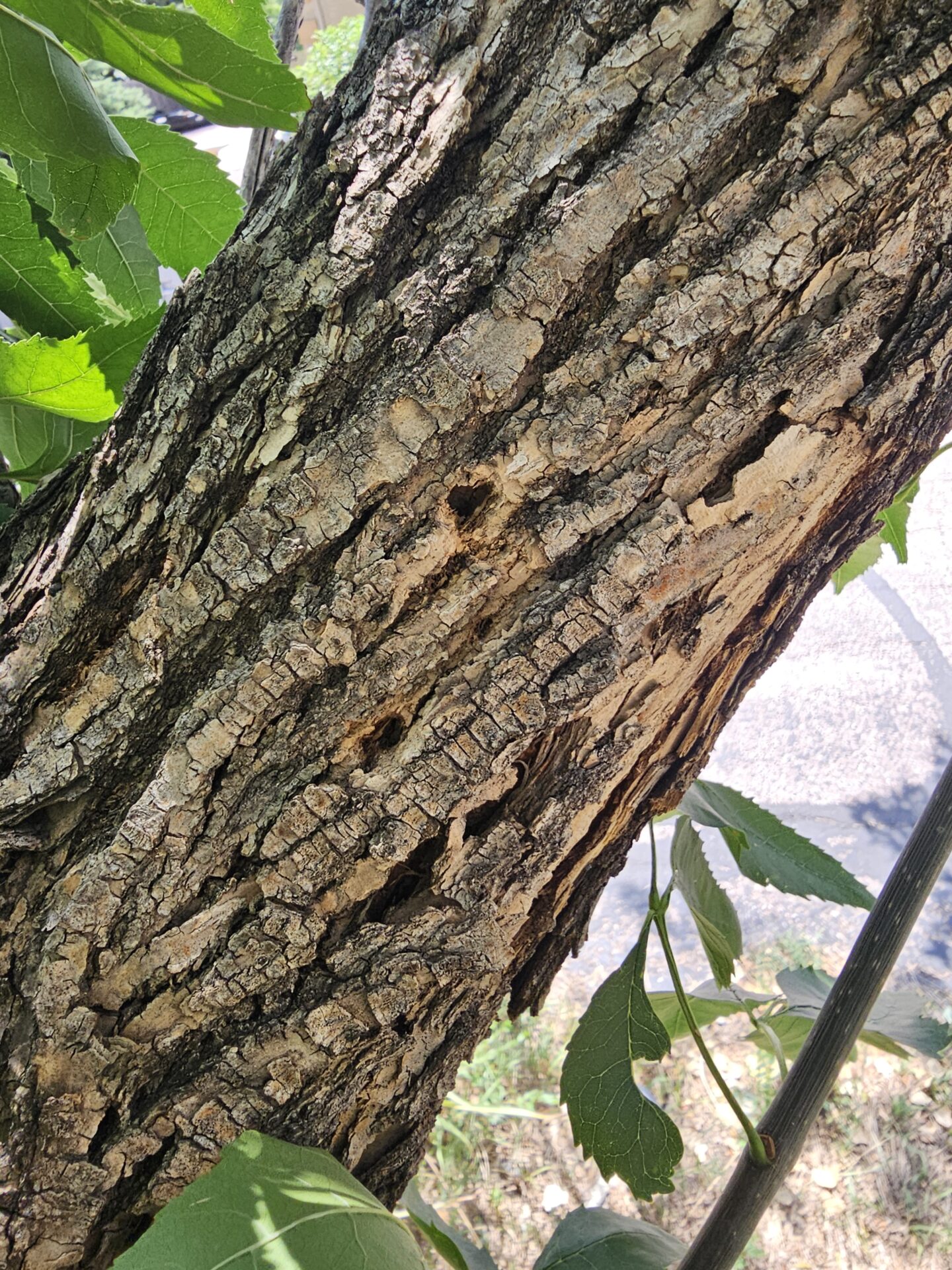
- Small D-shaped exit holes in the bark
- S-shaped tunnels beneath the bark
- New shoots forming at the base of the tree, also called epicormic growth
EAB can be difficult to detect early, so here’s what to keep an eye out for:
- Thinning canopy, especially in the upper portion of the tree
- Dead or dying branches
- Vertical cracks or splitting in the bark
- Increased woodpecker activity
- Small D-shaped exit holes in the bark
- S-shaped tunnels beneath the bark
- New shoots forming at the base of the tree, also called epicormic growth
Important note: Other stressors or pests can cause some of these symptoms. A professional inspection is the best way to confirm what’s actually going on.
Treatment Options: Can You Save an Ash Tree?
Short answer: Yes. IF you act early.
Treatment is focused on protecting healthy trees before damage becomes severe. Options include:

- Systemic insecticides applied through soil or trunk injections
- Products containing imidacloprid, which can provide some control
- Trunk injections with emamectin benzoate, which offer the most effective and long-lasting protection
Most treatments are applied on a one to two year cycle depending on the product and tree size. Timing matters. Waiting until visible damage appears can be too late.
When Removal Makes More Sense

If an ash tree is heavily infested or already in decline, treatment may no longer be effective. In these cases, removal is often the safest and most practical choice.
Many property owners choose a balanced approach. They preserve high-value trees while removing and replacing others. This helps maintain a healthy and diverse landscape over time.
Planning Ahead: Protecting Your Trees and Colorado’s Urban Forest
Even though Emerald Ash Borer has not officially reached every community, preparation is already underway, and for good reason as its spread across Colorado continues. Taking action early can make a big difference in how your landscape is affected.
If you have ash trees on your property, now’s the time to start paying closer attention. That means you should identify your trees, check their health each year, and know what infestation signs to watch for. It is important to talk to a certified arborist. They can inspect your trees and help you decide whether preventive treatment is a good idea.
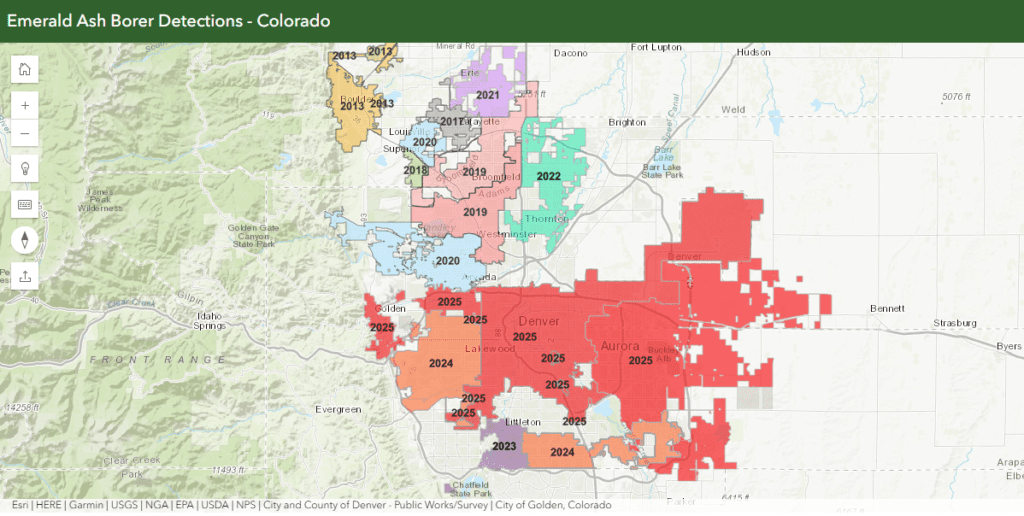
For the most up-to-date information on where Emerald Ash Borer has been confirmed in Colorado, you can view the Colorado State Forest Service’s interactive detection map. This tool is regularly updated and shows how the insect continues to spread across the Front Range and beyond.
Concerned about your ash trees or want a professional assessment?
The EAB is a serious threat, but it’s not a lost cause. With early detection, proper treatment, and careful planning, we can save many of Colorado’s ash trees. Communities can avoid the widespread canopy loss seen in other parts of the country.
If you have ash trees, the best move right now is simple. Know what you have, watch for signs, and have a plan.
I’m Tyler. I am the Plant Healthcare Manager for Front Range Arborists.
I just like to take a couple minutes to talk a little bit about Emerald Ash Borer. It’s an invasive wood-boring insect that was just discovered in the Pikes Peak region this July. We’ve gotten a lot of questions about it, a lot of phone calls, so I’m just going to talk a little bit about where it came from, what it does, the potential impacts that it’s going to have on the ash trees in Colorado Springs, and a little about what we can do to mitigate the effects of Emerald Ash Borer.
The Emerald Ash Borer is an invasive wood-boring beetle that was first detected in the United States in 2002 in a port area near Detroit, Michigan. It was first brought over, we believe, in solid wood packing material from Asia. Since then, it has spread through most of the Midwest and most of the eastern United States. It has caused roughly $12 billion of economic impact and has killed tens of millions of trees in the time since it was discovered.
It was first found in Colorado in 2013, where it had largely been isolated toward the greater Denver and greater Boulder areas until probably about a year or two ago, whenever it really started to spread, and has now been found in El Paso County as of 2026.
The reason why we’re so concerned about the presence of Emerald Ash Borer is because it’s a non-native insect. It has no natural predators, and none of the ash trees in North America have natural defenses against Emerald Ash Borer.
So that means every ash tree is susceptible to some degree, and there’s nothing natural that can control it. One of the major concerns with Emerald Ash Borer being in Colorado Springs is that roughly 15 to 20% of our urban canopy is ash trees. So, a significant loss of ash trees can create a significant impact economically and environmentally in our neighborhood and in our community.
One thing that makes Emerald Ash Borer difficult to control is the fact that it spends most of its life cycle underneath the bark. Adults are only active and visible from about late May, early June into about mid-August. So, in that time, that’s whenever people normally will see them flying around or on their ash trees. But most of the damage is occurring whenever the larvae are feeding underneath the bark in late summer.
The adults will emerge in May and June and will go through a period of maturation feeding, where they will feed on the leaves of the ash tree before laying eggs in early to midsummer. Those eggs will hatch and the larvae will bore into the tree, where they will feed underneath the bark on the cambium, which is the nutrient-rich, live tissue underneath the bark. They’ll remain there until they emerge as adults in the following spring.
As these larvae feed, they create really meandering, almost serpentine-like galleries underneath the bark, which cuts off a lot of moisture and nutrient flow to the tree and will ultimately be the reason why these beetles kill the trees.
Because many of the ash trees in Colorado Springs are already a little stressed, it can be difficult to detect whether or not a tree has been attacked by Emerald Ash Borer. Many of the signs and symptoms associated with Emerald Ash Borer attack are also associated with ash trees that have just been under a high amount of stress for multiple seasons.
Things like thinning canopies and split bark don’t necessarily mean that trees are infested with Emerald Ash Borer, but they are clues that we look at whenever we’re trying to identify trees that might be infested with Emerald Ash Borer.
On top of thinning canopies and split bark, we’re also looking for small, D-shaped exit holes that can be anywhere on scaffolding branches and the trunk or the main stem of the tree. We’re looking in those bark cracks for signs that there might be the feeding galleries of the larvae.
We’re looking for large amounts of what we call water sprouts or epicormic shoots, which are kind of bushy growths coming up from the ground, the trunk of the tree, or even branches of the tree. And we’re looking for woodpecker damage.
All of these things can help us put together whether or not a tree has been infested with Emerald Ash Borer and help us determine if we can treat the tree retroactively or if the tree needs to be removed.
In response to Emerald Ash Borer, there’s several different paths that we can take. I’d like to advise everybody who has large, healthy, mature ash trees to have those trees evaluated to make sure that they’re currently not being attacked and to strongly consider Emerald Ash Borer preventative injections.
These injections are done at the base of the tree. It’s minimally invasive, and the trees are injected all the way around the base of the tree. The chemical is taken up by the tree, distributed through the tree, and that will protect the tree for about two years.
A little bit of an investment now can help protect these large, mature, healthy trees into the future.
Trees that are maybe not in the greatest of health, that might be infested, or in otherwise poor growing areas, can be candidates for removal or removal and replacement. We can always get a tree replaced with a non-susceptible species like maple, oak, or honey locust and kind of save some of that heartache later.
Emerald Ash Borer carries a fungus called white rot, which is very detrimental to the structure of trees that have been killed by Emerald Ash Borer. What this does is it weakens the tree so much that it will essentially begin falling apart after a couple years.
So, if you delay in getting your ash tree removed after it’s been killed by Emerald Ash Borer, it can become quite a hazard and be very difficult and even more costly to remove in the future.
If you believe that your ash tree has been infested, or you think that your ash tree might become infested, or if you just have a high-value ash that you’re looking to have protected, give Front Range Arborists a call.
We’ve got plenty of arborists with Emerald Ash Borer experience, and we would love to help you out in keeping your ash trees healthy and help mitigate the effects of this pest as it makes its way through the Pikes Peak region.