
Few backyard features light up a child’s face quite like a tree swing. They’re simple, timeless, and give kids (and sometimes adults) that carefree, flying-through-the-air feeling. But before you set one up, it’s important to make sure your swing is safe—for both your family and your tree. With the right tree, the right rope, and the right installation method, you’ll create a safe spot for play that can be enjoyed for years to come.
Table of Contents
TL;DR: How do I hang a safe, long-lasting tree swing for my kids?
Answer:
Choosing the Right Tree
Not every tree in Colorado’s Front Range is suited for a swing. The best choices are strong, healthy hardwoods such as bur oak, hackberry, Kentucky coffeetree, or honeylocust. Some shade maples, like Norway or Tatarian, can also work if they’re mature and well cared for.
Avoid brittle trees like cottonwood, aspens, willow, or elm, which are prone to breaking under stress. And while evergreens like blue spruce and pine are Colorado icons, their branches are too brittle and angled to safely support a swing.
A good swing branch should:
- Be at least 8 inches in diameter (strong enough for years of use)
- Be a mature tree—older, well-established trees are usually more wind-resistant and hardy, making them safer long-term than young or recently planted trees
- Be positioned less than 20 feet off the ground (any higher and it may feel like you’re flying, but it becomes a safety hazard)
- Show no signs of cracks, decay, or disease
Colorado’s dry climate, strong winds, and heavy snow can stress trees, so choose one that’s well-watered and thriving before adding a swing. Think of the tree as your swing’s frame—if it isn’t sturdy, the fun won’t last.
Hanging Methods
There are two main ways to attach a swing safely:

Slip Knot with Rope Sleeve
Wrap the rope around the branch with a protective sleeve or rubber tubing to guard the bark. Tie a slip knot that loosens when not in use—this reduces the chance of girdling and allows the tree to keep growing naturally.
Eye Bolts
Drill a vertical hole through the branch, insert a corrosion-resistant eye bolt, and secure it with washers and a nut. Add a carabiner for easy rope attachment. This method is very strong, but it does leave a permanent hole in the tree, which can take time to heal around.

Both options can work—the best choice depends on your priorities between security and long-term tree health.
Selecting the Right Rope
The rope is the heart of your swing—it holds the fun together. For safety and durability, use ½-inch or thicker polyester rope. It’s strong, weather-resistant, and easy for little hands (or adult hands!) to grip.

Here’s what to avoid:
- Nylon:
- Too stretchy and slippery—harder for kids to hold onto
- Polypropylene:
- Inexpensive but weakens quickly in Colorado’s strong sun
- Natural fibers:
- Looks classic, but fray and break down fast; usually need replacing every year or two
Safety and Maintenance
Swings are meant for carefree fun—but only if safety is part of the setup. Check your swing regularly to make sure everything is still secure.
- Inspect the branch for cracks or damage
- Look at the rope for fraying or weakening
- Make sure the hardware is tight and rated for the right weight
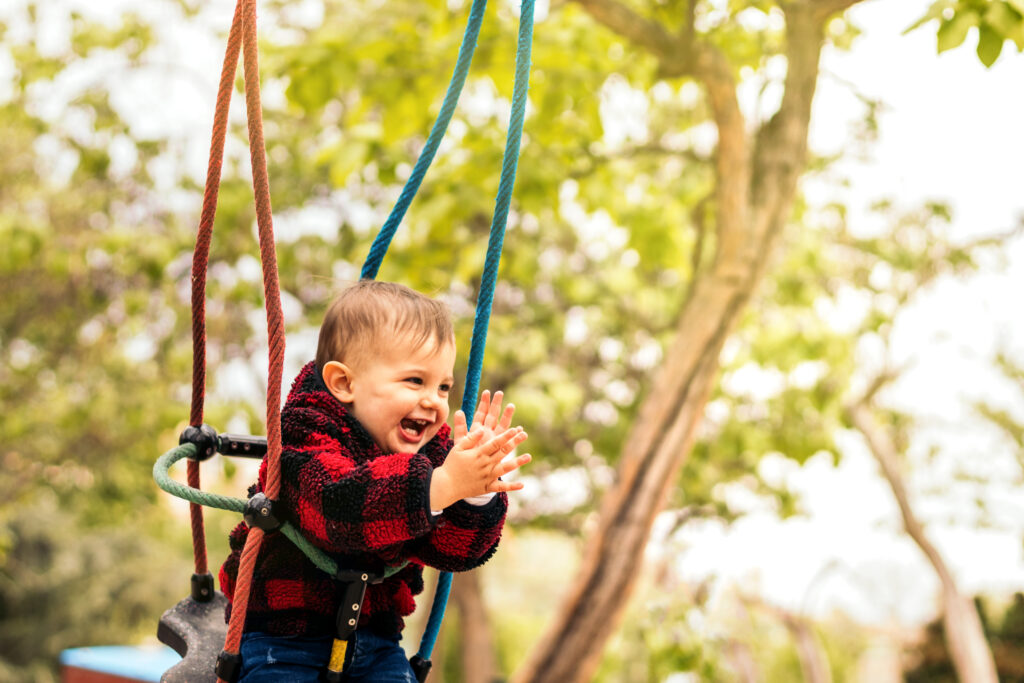
Replacing rope or hardware at the first sign of wear is far easier than dealing with an accident. And remember—kids grow, and so do trees. As both change, adjustments may be needed to keep the swing safe and fun.
What About Swings for Adults?
Tree swings aren’t just for children—porch-style swings, hammocks, and larger platform swings are popular backyard features for adults too. If you’re installing a swing for grown-ups, choose an even sturdier branch, use hardware and rope rated for higher weight limits, and give extra attention to tree health. A strong setup ensures your swing is a relaxing retreat—not a risky ride.
Protecting Your Tree
(and your fun)

A tree swing is more than just a backyard toy—it’s a place for kids to laugh, adults to unwind, and families to make lasting memories. Taking the time to choose the right tree, use the right materials, and inspect it regularly ensures the fun stays safe and the tree stays healthy.
We love seeing our customers’ families enjoy the outdoors, but safety always comes first! Call Front Range Arborists for professional advice on caring for your trees, as well as other services like tree pruning, stump and tree removal, and fire mitigation for a safe and protected yard. Schedule your consultation with Front Range Arborists today, and let’s keep your trees strong, safe, and swing-ready for years of play.
looking to Transform your Landscape?
Maybe you’re set on this tree swing thing, but what about other ways to spend time outdoors with your family? From teepees to veggie gardens, consider the possibilities of using your outdoor space.